






If you love the look of a beautifully frosted cake but find buttercream a bit heavy and tooth-achingly sweet, heavy whipping cream frosting might be exactly what you’re after. It’s light, airy, and delicately sweet, which makes it a lovely finish for cakes, cupcakes, and all manner of simple desserts.
Learning how to make frosting from heavy whipping cream is genuinely easy, too, once you know the method. There is a small catch, though: getting the texture right and keeping it from sagging or weeping once it’s on the cake can be a little tricky. Whipped cream is softer and less stable than buttercream by nature, so a little know-how goes a long way.
This guide covers the core method, your options for stabilising the frosting so it holds up, the desserts it suits best, and the common mistakes worth sidestepping. By the end, you’ll be able to whip up a fluffy, reliable frosting with confidence.
Table of Contents
What Is Heavy Whipping Cream Frosting?
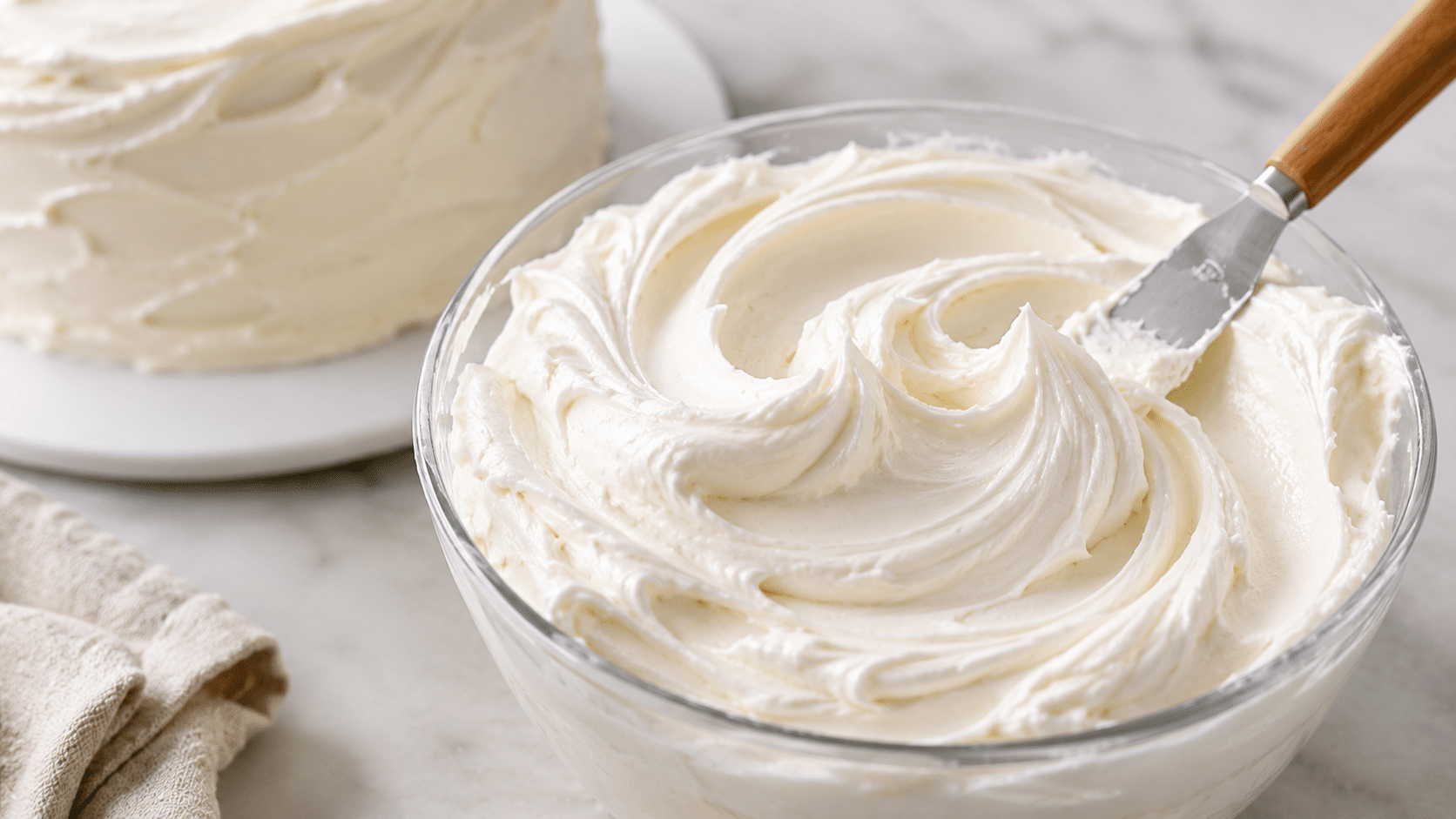
Heavy whipping cream frosting is exactly what it sounds like: a frosting made by whipping cold heavy cream (usually with a little sugar and vanilla) until it’s thick, soft and spreadable. It sits somewhere between plain whipped cream and a structured buttercream, giving you a light, cloud-like topping that still holds its shape.
The texture is soft, pillowy and smooth, with a clean, milky flavour that isn’t overly sweet. Because it’s not weighed down by butter or heaps of icing sugar, it feels far lighter on the palate. That’s the whole appeal for a lot of bakers.
So why choose it over denser frostings? It’s quicker to make, less sweet, and lets the cake itself shine rather than burying it under sugar. It also pairs beautifully with fresh fruit and lighter sponges.
Whipped frosting with heavy cream works best on sponge cakes, cupcakes, layered desserts and fruit-based bakes, where its softness is a feature rather than a flaw. It’s less suited to elaborate, sculptural decorating, but for everyday elegance it’s hard to beat.
Ingredients You Need for a Simple Whipped Cream Frosting

The beauty of this frosting is how few ingredients it takes. If you whip cream often, it’s worth keeping cream charger combo packs on hand, too.
- Heavy whipping cream: 300ml (about 1¼ cups), well chilled
- Icing sugar: 2–3 tbsp, to taste
- Vanilla extract: 1 tsp
- Optional stabilisers: Gelatine, instant pudding mix, mascarpone, or cream cheese
👉 A quick note on the cream itself: “heavy whipping cream” is the American name for it, so in Australia you’ll want thickened cream or pure cream with a fat content of at least 35%. The higher the fat, the more stable the whip and the better it holds its shape. Anything lower struggles to reach firm peaks and deflates quickly.
How to Make Frosting from Heavy Whipping Cream Step by Step
Here’s the core method. Follow these steps, and you’ll have a smooth, spreadable frosting in just a few minutes.
- Chill your bowl and beaters. Pop your mixing bowl and whisk (or beaters) in the freezer for 10–15 minutes before you start. Cold equipment helps the cream whip faster and hold its shape more firmly.
- Add the cream first. Pour the cold heavy whipping cream into the chilled bowl. Starting with just the cream lets you build the structure before adding anything else.
- Begin whipping slowly. Start at a low speed to build small, even bubbles, then increase to medium-high. This gives you a more stable foam than blasting it at full speed from the start.
- Add sugar and vanilla. Once the cream starts to thicken and leave soft trails, add the icing sugar and vanilla. Adding them too early can slow the whipping, so wait until you see some body.
- Whip to soft peaks, then to your target. For a light topping or filling, stop at soft peaks. For spreading or piping, continue to medium or stiff peaks, where the cream holds its shape when you lift the whisk.
- Know when to stop. The frosting is ready when it looks smooth, glossy and holds its shape. The moment it starts looking grainy or matte, stop immediately, as that’s the first sign of overwhipping.
The whole process usually takes three to five minutes. Keep a close eye on it towards the end, because whipped cream can go from perfect to over-beaten in a matter of seconds.
One final thing: for cupcakes, try to aim for stiff peaks so the frosting pipes cleanly and holds its swirl. For layer cakes, medium-stiff peaks spread more smoothly and are easier to work between layers.
👉 One tip that makes a real difference: keep everything cold. Chilled cream, a chilled bowl, and chilled beaters all help the fat whip up faster and hold better. Warm equipment is one of the most common reasons frosting won’t thicken.
How to Stabilise Whipped Cream Frosting So It Lasts Longer
Plain whipped cream frosting is delicious, but on its own it can deflate or weep after a few hours, especially in warm weather. The fat structure that holds the air relaxes over time, and moisture starts to leak out. Stabilising fixes this, helping your frosting stay firm for piping and cake coverage.
There are several ways to stabilise, and the right one depends on what you’re making:
- Gelatine: The strongest option for hold. Best when you need frosting to survive at room temperature for a while, such as a cake at a party. Bloom it, melt it, cool it slightly, then drizzle it in while whipping. The downside is it needs careful handling to avoid lumps.
- Mascarpone: Adds richness and structure with a lovely smooth finish. A great middle-ground choice that’s easier than gelatine and tastes wonderful. Slightly heavier than plain whipped cream.
- Cream cheese: Turns it into a cream cheese frosting with heavy whipping cream, adding tang and noticeably more stability. Ideal for piping and for cakes that need to hold up. It does change the flavour, so it’s best where that tang is welcome.
- Instant pudding mix: An easy, foolproof stabiliser that adds flavour and body. Popular for its simplicity, though it slightly alters the taste and texture.

Stabilised whipped cream pipes more cleanly, coats cakes more evenly, and holds decorative detail far longer. That said, keep expectations realistic: even stabilised, this is still a cream-based frosting. It performs best when kept cool and isn’t designed to sit out in a hot room all day, unlike a firm buttercream.
👉 For the smoothest, most consistent results, a whipped cream dispenser does the job in seconds.
Best Desserts to Use Whipped Heavy Cream Frosting On
This frosting shines brightest on lighter bakes where its softness and fresh flavour complement rather than overwhelm. If you’re wondering whether it suits your project, here’s where it works beautifully:
- Sponge cakes: The classic pairing; light frosting on a light crumb.
- Sheet cakes: Easy to spread across a large surface for a simple, elegant finish.
- Cupcakes: Pipes into pretty swirls, especially when stabilised.
- Pavlovas: A natural match with the crisp meringue and fresh fruit.
- Trifles: Perfect as airy layers between fruit, custard and cake.
- Fruit desserts: Their clean, milky sweetness balances tart berries and stone fruit.
The common thread is lightness. Heavy whipping cream cake frosting pairs especially well with fresh flavours and delicate desserts, where a heavy buttercream would feel like too much. If your bake is already rich and dense, a lighter frosting like this brings welcome balance.
Common Mistakes and How to Fix Them
Even a simple frosting has a few common pitfalls. Most come down to temperature or timing. Here’s a quick troubleshooting guide:
| Problem | Cause | Fix |
| Frosting won’t thicken | Cream or tools are too warm, or the fat content is too low | Chill everything well; use cream that’s 35%+ fat |
| Overwhipped, grainy cream | Whipped too long or too fast | Stop early; fold in a splash of fresh cream to smooth it |
| Collapses after piping | Not stabilised, or under-whipped | Add a stabiliser; whip to stiffer peaks |
| Frosting turns watery | Cream weeping over time, or under-whipped | Stabilise with gelatine or cream cheese; keep chilled |
| Cream is not cold enough | Ingredients or bowl left at room temperature | Re-chill and start again with cold equipment |
| Too much sugar or liquid | Over-sweetened or thinned by flavourings | Add sparingly; use extracts rather than watery liquids |
👉 Golden rule! Keep it cold, and don’t rush the final stage of whipping. Nail those two important rules when making a heavy whipping cream frosting, and most problems never arise in the first place.
Can You Make It Ahead, Store It, or Freeze It?
Yes, with a few sensible limits. Whipped cream frosting keeps in the fridge for around 2–3 days in an airtight container. Stabilised versions hold up noticeably better over that window than plain ones.
You can pipe it in advance, though freshly piped always looks its best. Frosted cakes and cupcakes are best eaten within a day or two and should be kept refrigerated until shortly before serving. Left out too long, especially in warmth, the frosting will start to soften.

Freezing isn’t generally recommended for the frosting on its own, as the texture can turn grainy once thawed. Some fully frosted cakes freeze acceptably, but the finish is rarely as good as fresh. For best results, store it cold, keep it covered, and make it as close to serving as you reasonably can.
Heavy Whipping Cream Frosting vs Buttercream and Cream Cheese Frosting
Not sure which frosting suits your bake? Each has its strengths. Here’s how whipped heavy cream frosting stacks up against the two most popular alternatives:
In short, buttercream wins on structure and elaborate decorating but can feel heavy and sugary. Cream cheese frosting offers tang and decent hold, sitting nicely in the middle. Whipped heavy cream frosting is the lightest of the three, the easiest to make, and the best pick when you want a fresh, less-sweet finish.
Choosing between them really comes down to your dessert and the day. For a light summer sponge, whipped cream wins. For a tiered birthday cake in the heat, buttercream is the safer bet.
| Frosting type | Sweetness | Stability | Best for | Storage |
| Whipped heavy cream | Light, delicate | Lower (better stabilised) | Sponges, cupcakes, fruit desserts | Fridge, 2–3 days |
| Buttercream | Very sweet | High, holds detail | Decorated cakes, hot days | Room temp or fridge |
| Cream cheese | Sweet with tang | Medium–high | Carrot cake, red velvet | Fridge, 3–4 days |
Making Whipped Cream Faster
If you find yourself whipping cream often, whether for entertaining, café desserts, or a busy dessert service, there’s a quicker route than the bowl and whisk. A whipped cream dispenser charged with a cream charger produces smooth, consistent whipped cream in seconds, with far less effort and more reliable results batch after batch.
It’s a genuine time-saver in scenarios like catering, topping hot drinks, plating desserts to order, or simply preparing toppings for a crowd. The dispenser keeps the cream aerated and ready, so you don’t have to re-whip between servings. For anyone doing this regularly, it takes the guesswork out of the process.
Bottom Line: A Light, Fluffy Frosting That Is Easy to Get Right
Heavy whipping cream frosting is a brilliant option for anyone who wants a lighter, fresher finish than buttercream can offer. It’s quick, it’s delicately sweet, and it lets your cakes and desserts speak for themselves.
The keys to success are simple: keep your ingredients and tools cold, whip carefully to the right peak, and reach for a stabiliser when you need the frosting to hold up for longer. Get those right, and it’s genuinely hard to go wrong. It’s the ideal choice over buttercream whenever lightness and fresh flavour matter more than heavy structure.
Ready to make whipping easier and more consistent? Take a look at NangWizard’s full range of cream chargers and whipped cream essentials for smoother dessert prep and dependable results, delivered fast across Australia.
Frequently Asked Questions
1. Can you use heavy whipping cream instead of butter for frosting?
Yes, but it creates a very different result. Heavy whipping cream makes a light, airy frosting with a soft texture and a clean, milky flavour, rather than the dense, rich, sweet finish of a butter-based frosting. It’s less sweet and lovely on lighter cakes, but it has lower stability, so it won’t hold intricate decoration or survive a hot room the way buttercream will.
2. How do you make whipped cream frosting hold its shape?
The trick is a combination of cold and stabilisers. Start with well-chilled cream, a cold bowl, and cold beaters, and whip to firm, stiff peaks. For a longer hold, add a stabiliser such as gelatine, mascarpone or cream cheese. These help the frosting keep its shape for piping and cake coverage without deflating.
3. Is whipped heavy cream frosting good for cakes?
It’s excellent for the right cakes. Light sponges, cupcakes, layered desserts and fruit-based bakes all suit it beautifully. For very warm conditions or elaborate, sculptural decorating, a more stable frosting like buttercream may serve you better. Stabilising the whipped cream widens the range of cakes it can handle.
4. Can you pipe frosting made from heavy whipping cream?
Yes, you can. Whip it to stiff peaks, and it pipes into clean swirls and borders. That said, plain whipped cream softens over time, so for piping that needs to hold for hours, a stabiliser like cream cheese or gelatine makes a real difference to how crisp your detail stays.
5. How long does heavy whipping cream frosting last in the fridge?
Kept in an airtight container in the fridge, it lasts around 2–3 days. Stabilised versions hold up best across that window. Frosted cakes and cupcakes are best enjoyed within a day or two and should stay refrigerated until just before serving for the freshest texture.
3/5 - (2 votes)

Nang Wizard
As the driving force behind Nang Wizard, I'm proud to lead Melbourne's fastest instant delivery company. With a team of 5 dedicated drivers strategically positioned across the city, we guarantee under one-hour delivery times. Our unwavering commitment to trustworthiness and customer satisfaction has earned us a 5.0-star Google Maps rating, and we're known for offering 100% refunds if a customer's delivery isn't on track within 15 minutes. With over 20,000 orders completed, we've become Melbourne's most trusted Kitchen Supply Store, ensuring our customers always come first. Join us and experience the magic of Nang Wizard.
Other Articles
Shopping cart0
There are no products in the cart!
Continue shopping