


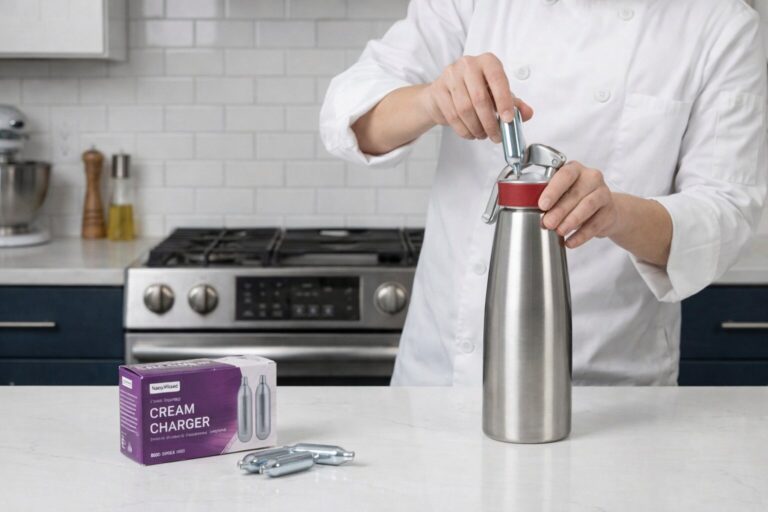






TLDR: Cream chargers for bakeries whip large volumes of cream fast, give you the same texture every single day, and keep sealed cream fresh in the fridge for a few days so less of it ends up in the bin. Start with a 1L stainless steel dispenser and one 8g N₂O charger per fill, and work your weekly charger order back from how much you bake.
Nobody ever became a baker because they love whisking cream by hand at half past four on a cold winter morning, but there it is on the list every day, somewhere before the first bake and opening up the store: plenty of cakes to fill and buns to pipe.
It’s certainly not something you can blast through quickly (not using the traditional methods, at least), and it can really drag out your morning. There is a solution, though. Charged cream chargers for bakeries take that job off your hands, delivering whipped cream on tap, at the texture you set, cake after endless cake.
Interested in acquiring one of these budget-friendly, time-saving tools, but know little about them?
This guide covers what you need to know before buying cream chargers at a bakery, including sizes, chargers, cream, cleaning routines, and keeping the shelf stocked for holiday seasons.
Table of Contents
Key Points
- A dispenser whips cream in seconds and holds it sealed, so you fill and decorate on demand instead of whipping fresh every hour.
- Sealed, charged cream lasts several days refrigerated, sparing you the bowls that go flat halfway through service.
- A 1L stainless steel dispenser handles most bakery volumes, with a 0.5L as a second unit for flavours or quieter days.
- One 8g N₂O charger does one fill, so your weekly order drops out of your daily production.
- Higher-fat cream pipes and holds better than light cream, and a cold dispenser keeps the foam standing up.
Where a Bakery Uses Whipped Cream
Visit any bakery and, just as you might expect, cream is everywhere. It fills the sponges and cream cakes, it goes into cream buns, choux and pastry work, all piped nice and neat, expected to hold through the trading day.
It does a lot of work at your average bakery, and that’s before we get to the pretty jobs. Rosettes down the side of a gateau, a swirl crowning a tart, that cap on a wedge of pavlova, all of it is much faster and cleaner from a dispenser nozzle than from a piping bag, and it looks the same on every piece, either way.
Of course, for a bench turning out cakes all week, the fill has to taste right and hold its shape, but that mostly comes down to frosting with whipping cream properly.
What a Dispenser Does for Your Production
Speed is the first thing you notice. Just charge the canister and give it a shake, and the cream is ready in seconds. There is no mixer droning away for every batch and no bowl to scrape, so you work the rest of the morning off a lever and a nozzle.
Consistency is what you come to rely on, as a dispenser aerates the same way every time, which hand-whipping never quite manages, especially across a tired early shift. Using cream chargers in a bakery results in Monday's fill matching Saturday's, so the cabinet looks the same whoever is on shift.
💡 Pro Tip: Keep one dispenser on plain sweetened cream and a second on a flavour, say vanilla or coffee, through the morning fill. You decorate two lines back to back without ever stopping to rinse and swap a single unit.
Where the Savings Come From
The bigger saving is waste, or lack of it. Cream beaten in a bowl softens and weeps inside a couple of short hours, so a busy bakery bins whatever it hasn't used by the end of service, day after day.
Sealed in a charged dispenser, that same cream holds for several days because the gas slows it down and the shut head keeps air out. Three to five days is a safe window when using cream chargers in bakeries, as long as you keep it cold between uses and never push past the date on the carton.
All told, the cream you stop throwing away adds up quickly. The table below covers the approximate numbers for a bakery getting through 5kg of cream a day, six days a week, with cream at around $12 a kilo.
| (Average Bakery) | Hand-whipped in a bowl | Charged dispenser |
|---|---|---|
| Cream used per day | 5kg | 5kg |
| Typical cream wasted | 20% (softens, weeps) | 5% (sealed, holds days) |
| Wasted cream per day | 1kg | 0.25kg |
| Wasted cream cost per week | $72 | $18 |
| Wasted cream cost per year | $3,744 | $936 |
Choosing the Right Dispenser
A 0.5L dispenser is light and quick to refill, which suits smaller fillings and slower days, while the 1L is the one that carries a bakery, filling more per charge so you are not reloading every ten minutes. Most kitchens prefer a 1L charged cream dispenser as the main unit and keep a 0.5L nearby for a second flavour.
What it is made of counts just as much, as stainless steel copes with the rigours of a busy bakery easily, such as the odd knock here and there and a hot wash every night, where aluminium and plastic give up far sooner.
| Dispenser | Best for | Keep one as |
|---|---|---|
| 0.5L stainless | Flavours, small runs, quiet days | Second unit |
| 1L stainless | Main daily production | Workhorse |
Check the head and gaskets before you commit, since those wear first, and replaceable seals save you binning the whole unit over one worn washer. If you are torn between styles, our dispenser vs siphon guide covers everything.

How Many Chargers You Will Get Through
One 8g N₂O charger aerates one fill, be it a 0.5L or a 1L canister, and that one-to-one rule makes stocking cream chargers bakery supplies painless. To size your weekly order, count the full dispensers you fill in a day and multiply by how many days you bake.
Six dispensers across six trading days lands near thirty-six chargers a week, so a box of fifty covers you with spare for the re-charge a batch wants after a night in the fridge. If your numbers run higher, our bulk cream chargers guide shows where buying by the case starts paying you back.
🧁 Did You Know? A 1L dispenser makes around four times the whipped cream you would get beating the same cream by hand, because the gas does the aerating instead of air you fold in. That is why cafés and bakeries switched to them in the first place.
Cream, Piping and Keeping It Cold
For piping and cake work the cream needs enough fat to hold a shape, so thickened or whipping cream around 35% is the bakery standard. Load the canister no more than two-thirds full, charge, then shake it firmly before you pipe, holding the nozzle close and letting the pressure do the work.
Warm cream foams badly and falls fast, so chill both the cream and the dispenser before filling, and keep the unit in the fridge or an ice bath between jobs. Left out through a warm service, it gives you thin, tired foam by mid-morning.
Cleaning keeps your cream chargers bakery kit food-safe. At the end of the day, bleed the pressure, pull the head apart, and wash the body, head, gasket and nozzle in warm soapy water, paying attention to the nozzle where cream dries and blocks. Our blog post on clearing a blocked nozzle will help you deal with a gummed-up tip.
Storing filled cream chargers in a bakery overnight? Keep it charged, sealed and cold for the next service.
Ordering Around the Busy Seasons
Cream demand does not remain even across the year, and running dry mid-week in December is the kind of morning that costs you a great deal in terms of sales. Christmas piles on pavlovas, trifles and festive bakes, Easter brings the cream buns, and Mother’s Day sends gateaux and celebration cakes.
Lift your orders well above the usual weekly figure ahead of those runs, and place them early while the whole trade is pulling on the same stock. A standing buffer of cream chargers bakery stock, rather than ordering to the exact number, keeps one mad Saturday from stopping your bench cold.
The size and type you order should match how you bake, which is where choosing a cream charger for your own specific needs really pays dividends.
Bottom Line
A dispenser is one of the cheaper upgrades a bakery can make, and you feel it straight away in how much faster the bench moves and how little cream goes in the bin.
Go for a 1L stainless unit with one 8g charger per fill and a good high-fat cream, then let your daily bake set the weekly order. One good whipper changes how the whole morning runs, with cream whipped in seconds and far less going in the bin at closing time.
Our whipped cream dispensers are built in stainless for daily service and ship fast across Melbourne and Australia-wide, so you can have one on the bench this week.
Frequently Asked Questions
1. How many cream chargers does a bakery use per week?
Take the dispensers you fill in a day and multiply by your trading days, then add a little spare for re-charges. Six dispensers across six days works out somewhere near thirty-six chargers a week.
2. How long does charged cream keep in a bakery fridge?
Several days, with three to five a safe window for most bakery cream. Keep the dispenser cold between uses and stick to the date on the carton.
3. What cream should a bakery use for piping and fillings?
Something around 35% fat, like thickened or whipping cream, holds a shape best for piping and cake work. Lighter creams foam soft and sink, so leave those for drinks.
Rate this post

Nang Wizard
As the driving force behind Nang Wizard, I'm proud to lead Melbourne's fastest instant delivery company. With a team of 5 dedicated drivers strategically positioned across the city, we guarantee under one-hour delivery times. Our unwavering commitment to trustworthiness and customer satisfaction has earned us a 5.0-star Google Maps rating, and we're known for offering 100% refunds if a customer's delivery isn't on track within 15 minutes. With over 20,000 orders completed, we've become Melbourne's most trusted Kitchen Supply Store, ensuring our customers always come first. Join us and experience the magic of Nang Wizard.
Other Articles
Shopping cart0
There are no products in the cart!
Continue shopping