





TL;DR: A whipped cream dispenser and a cream whipper are the same kitchen tool: a pressurised canister that aerates chilled cream using a food-grade nitrous oxide (N₂O) cream charger. There’s no mechanical or design difference between the two – the split is naming convention, with “cream whipper” more common on UK and European listings and “whipped cream dispenser” the usual label across Australian and US retail. Both take the same standard cream charger.
Whipped cream dispenser, cream whipper, gas cream whipper, cream siphon – scroll through enough kitchen supply listings and all four names turn up on what looks like the same stainless steel canister. Recipe sites, imported listings, and local Australian stores simply settled on different terms, so two shoppers comparing prices can end up thinking they’re looking at different equipment when they’re not.
This guide works through why the two names exist, how the device actually works, what you can put in one beyond whipped cream, and what to check before buying a cream whipper in Australia. Every use case covered here stays in the kitchen – desserts, coffee, and culinary foams.
Table of Contents
Key Takeaways
- A cream whipper and a whipped cream dispenser are the same device – there’s no functional difference between them.
- The split is retail convention: “cream whipper” is the common label on UK and European listings, “whipped cream dispenser” dominates Australian and US retail.
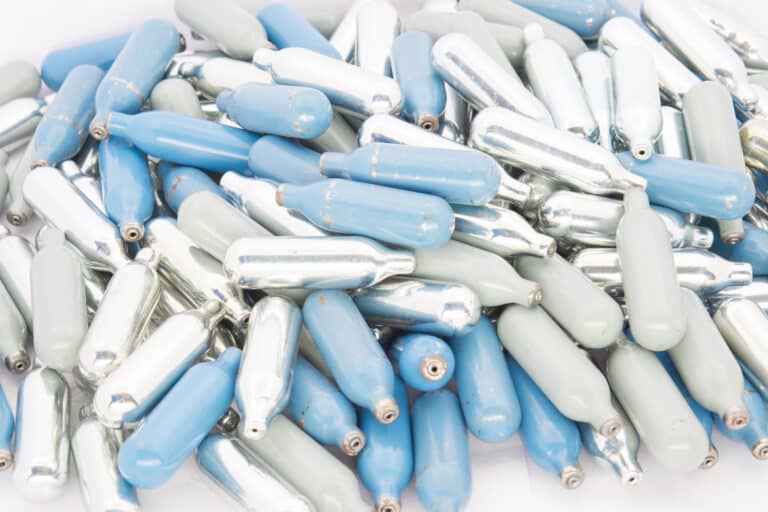
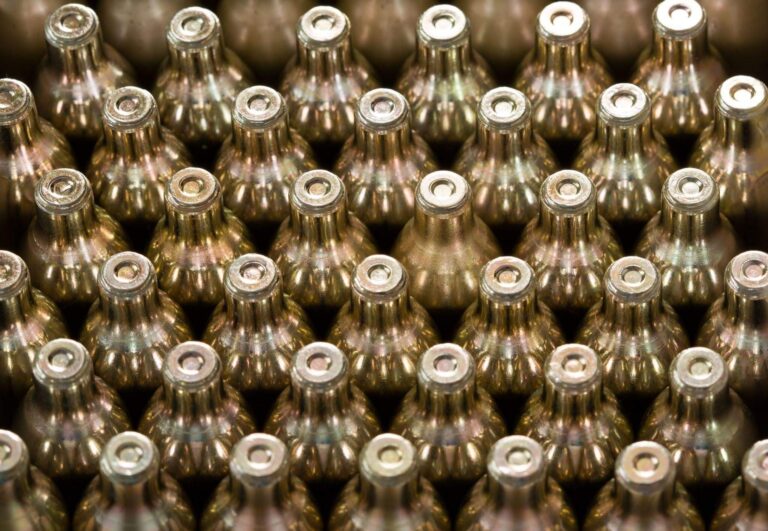
- As of 2026, a standard cream charger holds 8g of food-grade N₂O at 99.9%+ purity, and one charger fully charges a 0.5L dispenser.
- A cream whipper isn’t limited to whipped cream – the same canister makes coffee cold foam, culinary foams, and quick flavour infusions.
- Buying checklist in one line: match capacity and material to how often you’ll use it, then confirm the charger fits the standard 7/16″ UNF thread.
Why Does the Same Device Have Two Names?
The same device carries two names because retailers in different regions settled on different labels. European kitchen suppliers popularised “cream whipper,” while Australian and American stores standardised on “whipped cream dispenser.”
One name describes what the tool does to the cream (whips it); the other describes how you serve it (press a lever, it dispenses). Shoppers will also meet “cream siphon” and “gas cream whipper” on the identical canister.
All four names describe one pressurised device, not a family of variants. “Whipper” took root in Europe’s professional pastry kitchens before the tool reached home cooks, which is part of why it still shows up more on European and UK listings today; treat that as the general pattern rather than a dated history.
None of this changes what you can do with one. A recipe written for a “cream whipper” works identically in a “whipped cream dispenser,” and a charger sold for one fits the other without adjustment. That matters most when comparing prices in Australia. Imported listings often say “whipper,” local retailers usually say “dispenser.” Search both and you’ll find the same equipment.
How Does a Cream Whipper Work?
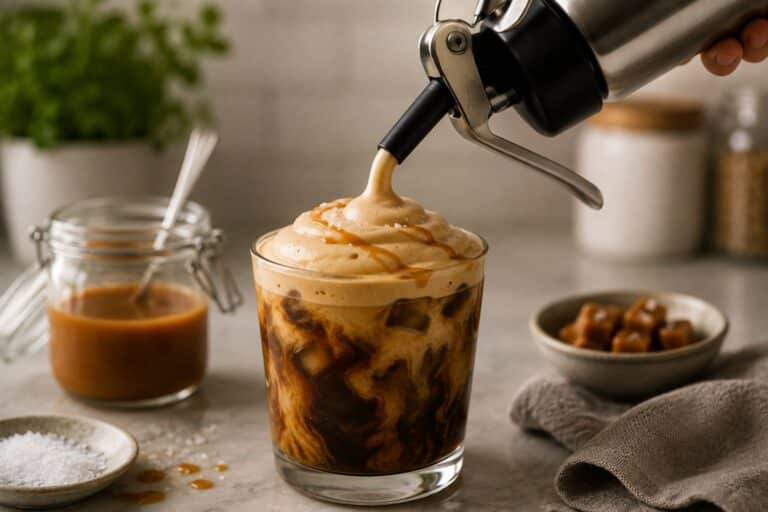
A cream whipper works by dissolving pressurised food-grade nitrous oxide into the fat in chilled cream, so that pressing the lever lets the gas expand and aerate the cream instantly. Screw an 8g N₂O charger into the holder and a pin pierces its seal; the gas fills the sealed canister under pressure, forcing the N₂O to dissolve into the cream’s fat rather than sit on top of it. Release the lever, and the pressure drop lets that dissolved gas expand again, turning liquid cream into whipped cream in seconds rather than minutes.
N₂O does this job because it’s flavourless and dissolves readily into fat. That’s something a whisk can’t manage in the same amount of time. A charged canister also holds cream ready in the fridge, so you’re aerating on demand rather than whipping a whole batch up front and hoping it lasts the service.
Capacity and chargers scale together: one standard 8g charger fully charges a 0.5L dispenser, and larger 1L models generally need two.
Beyond whipped cream, the same canister handles low-fat milk for coffee cold foam and strained, food-safe liquids for culinary foams and rapid flavour infusions.
Anatomy of a Whipped Cream Dispenser
A whipped cream dispenser has five core parts: the canister body, the head with valve and lever, the charger holder, the nozzle tips, and the head gasket.

Why Nitrous Oxide and Not Other Gases?
Food-grade N₂O dissolves into cream fat under pressure without adding a flavour of its own. A soda siphon’s CO₂ does the opposite job – it carbonates a liquid rather than whipping it, so a CO₂ bulb produces a thin, fizzy result instead of whipped cream.
Culinary cream chargers are sold specifically as food-grade, high-purity gas for this reason, and that purity is the benchmark to look for on a product page rather than a vague “premium” claim.
How Do You Use a Whipped Cream Dispenser Step by Step?
Using a whipped cream dispenser comes down to five steps – chill, fill, seal, charge, and dispense – and a first-timer can get through the whole process in under five minutes.
- Chill first – cold cream whips reliably; a warm canister under-performs no matter how fresh the charger is.
- Fill with cold cream, plus any sugar or vanilla, under the max-fill line.
- Screw the head on firmly and check the gasket is seated before charging.
- Charge and shake – screw in an 8g N₂O charger until you hear the gas release, then shake three to five times.
- Dispense nozzle-down, pressing the lever to release the whipped cream.
Before unscrewing the head afterwards, vent any remaining pressure by pressing the lever with the nozzle pointed away from food, then disassemble and clean. Empty steel chargers can usually go in household steel recycling (check with your local council).
Two things trip up most first-timers: runny output (cream too warm or under-shaken – chill and shake again) and sputtering (canister overfilled or the charge exhausted – respect the max-fill line, add a fresh charger). Either way, wash the head, gasket, and nozzle after every use, and replace the gasket once dispensing weakens; NangWizard stocks replacement seals and nozzles if yours needs one.
What Should You Look For When Buying a Cream Whipper in Australia?
Four things matter most when buying a cream whipper in Australia: capacity, body material, charger compatibility, and whether spare parts are actually available afterwards.
Capacity comes down to how often you’ll use it.
0.5L is best for home baking and cold foam, 1L for cafés and anyone entertaining often enough that refilling mid-service gets old, and the bigger canister needs more chargers per fill. Stainless steel costs more up front but holds up to regular use and cleans up easier; aluminium is lighter and cheaper, better suited to occasional use than daily service.
Charger compatibility is the one spec worth checking before checkout. Confirm the dispenser takes standard 8g N₂O chargers on the common 7/16″ UNF thread.
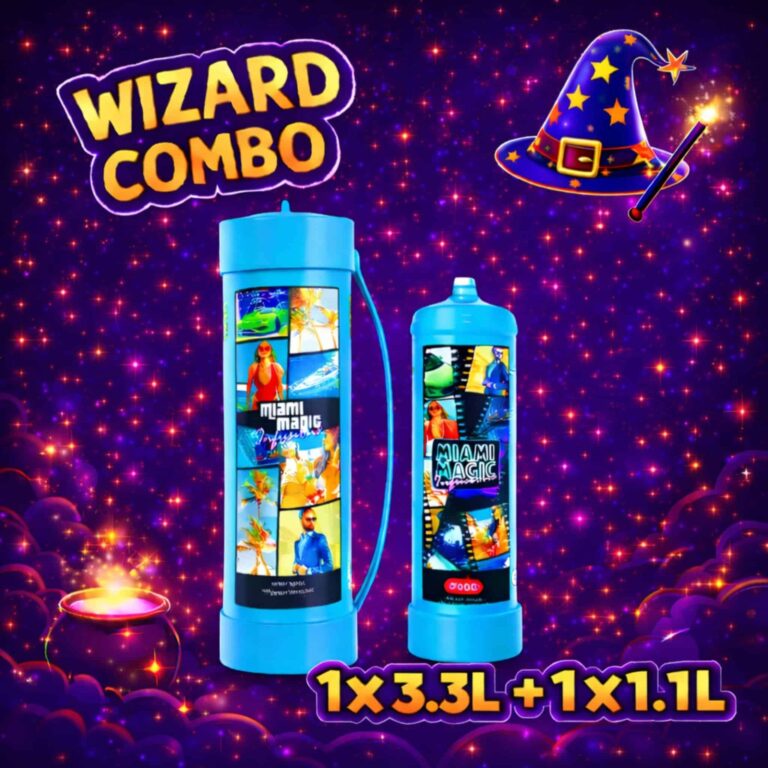
Every brand NangWizard stocks – Mosa, BestWhip, SupWhip, SupremeWhip, iSi Professional, and the house brand Miami Magic – is built to that fitting, so the choice comes down to price and availability rather than compatibility. Also check whether replacement gaskets, seals, and nozzle tips are actually sold for the model. A dispenser with no parts supply becomes disposable the first time a seal wears out.
Local stock ships Australia-wide in 1–3 business days, and Melbourne orders average 20–60 minutes door to door. Pairing a dispenser with a bulk pack of chargers in one order also trims the combined cost.
Frequently Asked Questions
1. Is a cream whipper the same as a whipped cream dispenser?
Yes, the names are regional retail conventions rather than different products. “Cream whipper” is more common on UK and European listings, “whipped cream dispenser” on Australian and US ones, and both take the same standard 8g N₂O charger.
2. What can you put in a cream whipper?
Cream for whipping, low-fat or skim milk for cold foam, and strained, food-safe liquids for culinary foams and rapid flavour infusions. Anything with pulp, seeds, or solids needs straining first, since undissolved solids can block the valve.
3. Do I need a special charger for my cream whipper?
No, most dispensers accept a standard 8g N₂O charger on the common 7/16″ UNF thread, so only check the spec if you’re using an unusual or older model.
4. Can a whipped cream dispenser make cold foam for coffee?
Yes, charge low-fat or skim milk instead of cream for a stable, café-style cold foam. See our culinary foam guide for the full method.
Same Tool, Two Names
Whatever the label says – cream whipper or whipped cream dispenser – you’re buying the same tool, so choose on capacity, material, and charger compatibility rather than the name on the box.
NangWizard stocks both, plus every charger brand that fits them, with Australia-wide shipping in 1–3 business days and Melbourne delivery averaging 20–60 minutes. Shop cream whipper dispensers, or browse cream chargers and combo deals to pair with one.
3/5 - (2 votes)

Nang Wizard
As the driving force behind Nang Wizard, I'm proud to lead Melbourne's fastest instant delivery company. With a team of 5 dedicated drivers strategically positioned across the city, we guarantee under one-hour delivery times. Our unwavering commitment to trustworthiness and customer satisfaction has earned us a 5.0-star Google Maps rating, and we're known for offering 100% refunds if a customer's delivery isn't on track within 15 minutes. With over 20,000 orders completed, we've become Melbourne's most trusted Kitchen Supply Store, ensuring our customers always come first. Join us and experience the magic of Nang Wizard.
Other Articles
Shopping cart0
There are no products in the cart!
Continue shopping